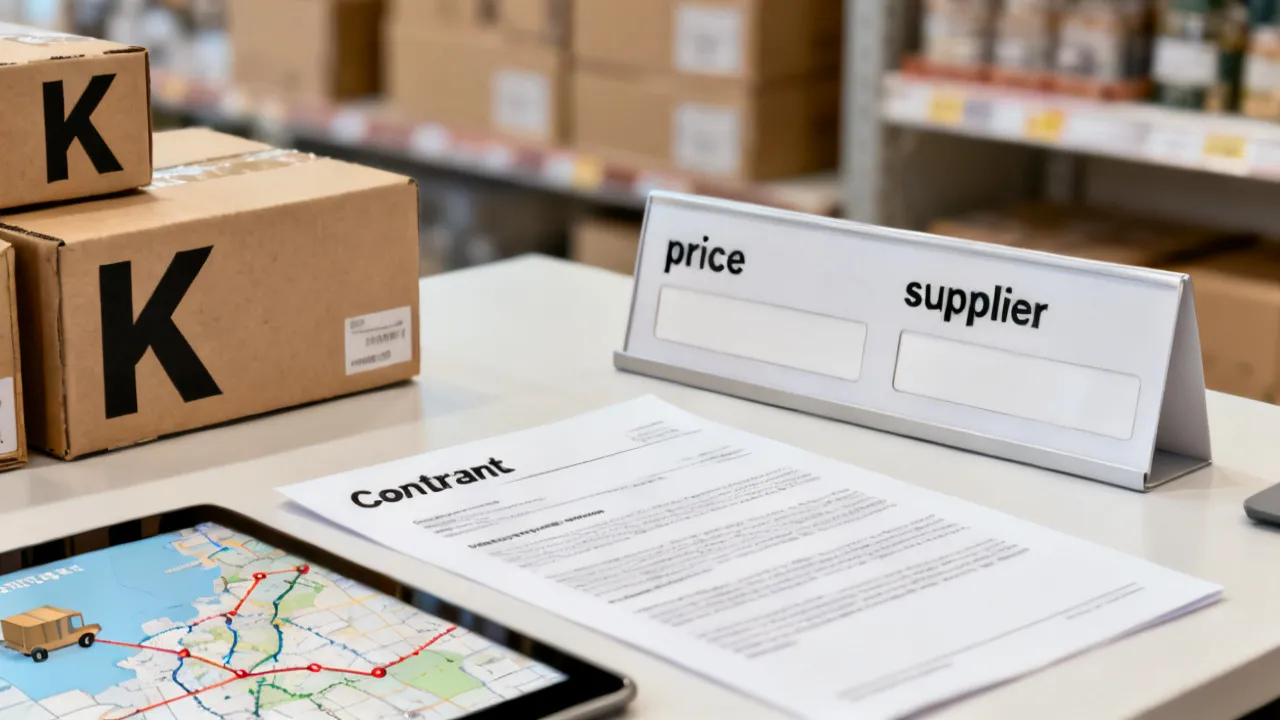
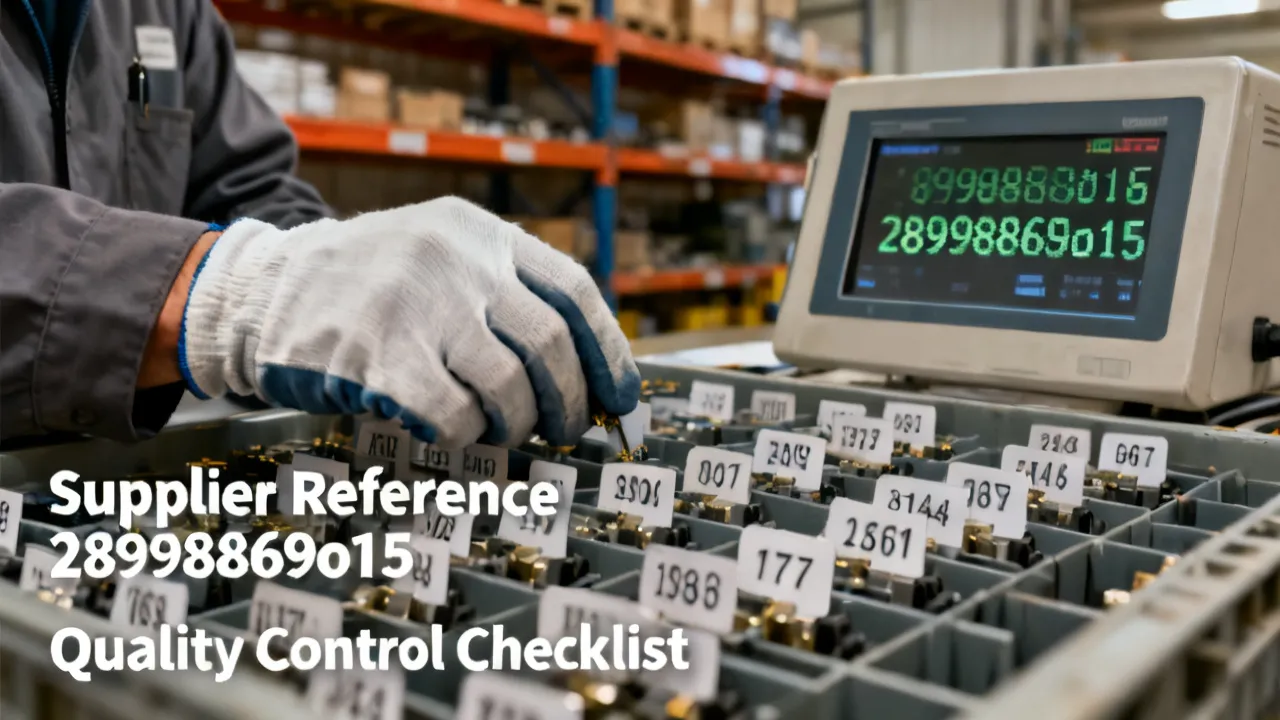
Understanding 1333 Components and Supplier Options
This guide explains how to evaluate 1333-related sourcing decisions using practical criteria for specification matching, documentation checks, and quality controls. Objectively, “1333” is often used as an internal part/reference number or a model code across procurement workflows, while blank quote tokens and supplier details reflect typical cataloging formats. The article outlines how to compare suppliers without relying on unverified claims.

What “1333” Means in Procurement—and How to Choose the Right Supplier
When buyers see 1333 in a catalog, work order, internal ERP list, or purchasing database, the immediate task is not guesswork—it is traceable verification. A code that looks simple can hide complexity: it may be an internal cross-reference, a revision-dependent reference, or a mapping key used to connect drawings, bills of materials (BOMs), maintenance instructions, and supplier catalogs. This guide explains how to interpret 1333 as a part/reference identifier, validate what it physically and functionally represents, and compare supplier options using structured documentation, testing records, and specification alignment. Along the way, it also addresses how placeholder quote tokens (like '' '' '''' '' style fragments) can appear in procurement templates and should be treated as formatting artifacts until confirmed by the supplier.
In many industries, a numeric sequence like 1333 functions as a cross-reference between internal systems and external supplied parts. The same numeric sequence can appear across different contexts—sometimes as a part number, sometimes as an index entry, sometimes as a drawing callout, and sometimes as a legacy code from an older BOM. Because of that, the buyer’s job is to confirm the governing source (drawing revision, standard, approved part list, or controlled specification) rather than assume universality based on the digits alone.
Procurement teams often encounter situations where the supplier-facing catalog uses one identifier, while internal documents use another. In those cases, 1333 may be the internal code, and the supplier’s manufacturer part number may differ. Or, 1333 may be the supplier’s code, while your internal system has mapped it to a different internal “material master” record. Understanding the role of 1333 in your document chain is the first step toward preventing silent substitution, revision drift, or compliance mistakes.
Critical First Checks (Before Pricing or “Lead Time” Discussions)
Even before you consider price, availability, or “lead time” claims, a supplier comparison should begin with whether the product can be verified against your requirements. For 1333-coded components, the key questions usually fall into four categories:
- Specification match: dimensions, tolerances, material grade, surface finish, performance rating, interface standards, and any constraints tied to your end product’s design.
- Document completeness: drawings, certificates, test reports, revision history, and traceability lot numbers (including how the supplier records them and how they identify the shipped items).
- Quality system maturity: evidence of controlled production such as documented procedures, calibration practices, internal audits, corrective action processes, and audit readiness.
- Commercial clarity: what is being sold (exact item), what is included (packaging, labeling, documentation set), and what services are provided (inspection, labeling support, documentation packaging, or compliance support).
From an industry-expert perspective, failures during procurement rarely stem from the supplier being “bad” in a general sense. More often, they stem from ambiguous requirements, mismatched revisions, incomplete qualification documents, or a lack of clarity about what exactly the supplier will ship. A robust early-check routine reduces these risks immediately by forcing clarity before money and scheduling decisions are locked in.
It is also worth noting that procurement is not only a commercial activity; it is part of a larger quality chain. Even if the supplier’s item appears visually correct or “fits,” the quality consequences of a mismatch can surface later—during installation, functional testing, field operation, or audit review. If 1333 is critical for safety, regulatory compliance, warranty coverage, or performance reliability, then early verification becomes a cost-avoidance strategy.
Understanding “Supplier Details” and Catalog Placeholders
Procurement documents sometimes contain placeholders, fragments, or templated tokens—such as the repeated quote tokens embedded in the prompt format (for example, '' '' '''' '' style entries). These artifacts are common when systems generate templates that later get populated by a purchasing team, a sourcing platform, or a warehouse import routine.
Practically, that means you should treat any quote-like token fragments as not inherently meaningful until you confirm the underlying field values: supplier legal name, registered address, product manufacturer identity, and the exact part mapping to 1333. Many procurement platforms use templated forms where certain fields are blank when exported, and those blanks sometimes appear as odd punctuation sequences. While the punctuation itself may look harmless, the absence of filled fields can hide meaningful missing information such as product classification, traceability requirements, or labeling expectations.
If you receive an offer where “supplier details” are incomplete—missing the manufacturer name (if different), missing traceability information, or using inconsistent labeling—your comparison should penalize that ambiguity. In procurement audits and supplier quality reviews, documentation clarity is evaluated strictly because documentation clarity prevents mis-shipment and enables controlled verification after delivery.
Additionally, procurement risk can increase when placeholders appear in multiple places. For example, a template might show placeholders for “supplier details,” “contact person,” “document package,” and “delivery conditions.” If those items are blank, you may also be missing information about incoterms, packing list format, shipping method, certificate of compliance type, or inspection scheduling. Therefore, treat placeholders as a warning sign, not as a formatting curiosity.
How to Compare Suppliers for Items Labeled “1333”
Supplier comparison should be evidence-based. While buyers naturally want to compare price and speed, high-quality procurement practices prioritize verification capability and documentation completeness. Below is a professional framework commonly used in sourcing and supplier quality engineering.
1) Confirm the Governing Reference for “1333”
Ask for the governing link between 1333 and the controlled documents that define the part. Specifically request:
- Drawing number and revision (or the approved part number list entry, if drawings are replaced by an internal approved list)
- Manufacturer part number (if your internal code differs from the supplier or manufacturer code)
- Specification sheet with revision date and/or controlled document identifier
- Any relevant standard references (industry standard, regulatory standard, customer standard, or internal company standard)
To make this practical, ensure that your supplier submission process requires the supplier to explicitly state what documents correspond to the requested item. In other words: the supplier should not only provide a catalog link; they should provide the mapping from your requested 1333 to their shipped product and the controlled documents that define conformance.
If the supplier cannot link 1333 to a controlled document set, your organization may be exposed to silent substitution. That risk is especially high when codes are internal and when catalog imports merge multiple sources into one “material master” record. Some systems accidentally map multiple manufacturer variants to the same internal code, especially when the internal code was created historically and not maintained with revision control.
Another common failure mode is revision drift. For example, an old drawing revision may still be referenced in an internal system, while the supplier might stock or produce the newer revision. Without explicit revision locking, shipments might meet the general description but not the controlling revision. For critical products, this can become an audit and compliance issue, not just a technical mismatch.
2) Validate Quality Evidence (Not Just Promises)
Request objective artifacts, such as:
- Material certificates or declarations (as applicable, for example, certificates of conformity, material grade declarations, or chemical composition statements where relevant)
- Inspection and test reports for the specific lot/batch you will receive (not generic reports)
- Traceability documentation linking serial/lot numbers to manufacturing records
- Calibration evidence for measurement systems if your acceptance process requires dimensional verification
Industry practice emphasizes that “conformance” is credible when supported by controlled records. A supplier may state “meets specifications,” but if those specifications are not clearly referenced and if the supplied certificates do not match the shipped lot, the claim becomes difficult to verify. Quality teams often rely on the supplier’s ability to deliver traceable, lot-specific evidence.
For broader context on quality management systems, organizations commonly align with ISO 9001 principles, though the specific certification is not the only factor. The key is whether the supplier’s system enables consistent control: revision management, documented manufacturing processes, traceability practices, internal inspection control, and corrective action mechanisms.
If your company uses risk-based supplier approval, you can also tailor the depth of evidence. For low-risk items, a simpler certificate package might be adequate. For high-risk items—especially those that affect safety, performance, or compliance—you typically require more robust documentation such as inspection plans, sampling methodologies, functional test evidence, and sometimes more detailed traceability or deviation reporting.
When you receive evidence, verify consistency across documents. For example, confirm that the lot number shown on the packing list matches the lot number on the certificate, and that the lot number is traceable to manufacturing records or inspection records. A mismatch often indicates an error in handling, documentation, or packaging. Such mismatches should be treated as potential root-cause signals rather than dismissed as clerical mistakes.
3) Clarify Pricing Structure and What It Includes
When comparing price for 1333-labeled items, ensure you compare equivalent scopes. A lower unit cost can be offset by additional costs such as:
- Extra documentation fees (certificates, inspection packages, special certificate formats)
- Packaging requirements (anti-static packaging, moisture barrier, protective handling)
- Custom inspection or incoming inspection time (if your company must spend extra effort because the supplier does not provide sufficient documentation)
- Expedited shipping for tighter schedules
Even if a supplier provides a price, your evaluation should focus on the total landed and verification cost. This is particularly true when your internal acceptance process requires dimensional verification, functional testing, compliance checks, or when your product is subject to stringent quality gates.
From a procurement analytics viewpoint, you can compute a “true cost” that includes:
- Unit price
- Shipping and handling costs (including packaging material costs included or excluded)
- Costs of rework or additional incoming inspection if documentation is incomplete
- Costs associated with schedule risk (expedited costs, production downtime, or risk of line stoppage)
- Administrative costs (time spent resolving document discrepancies)
In many organizations, the “cheapest quote” becomes more expensive once document rework, expedited shipping, or nonconformance handling is added. Therefore, procurement should explicitly align the “included scope” with your acceptance criteria.
Also watch for commercial inconsistencies. For instance, a supplier may offer a low unit price but exclude certificate of compliance, provide only a generic statement without lot-specific details, or ship without proper labeling. Those gaps can be more expensive than the original unit price difference.
4) Assess Lead Time Reliability and Communication
For 1333 items, lead time can be affected by raw material availability, production slots, backlog, inspection scheduling, and revision-dependent production changes. Rather than relying on a single quote date statement, ask:
- Is the item stocked or made-to-order?
- What is the typical production cycle and what triggers delays?
- How are revisions communicated if the component changes, and what revision lock mechanism exists?
- What is the process for handling partial shipments, backorders, or substitution requests?
Reliability is demonstrated through clear documentation of timelines and responsiveness to documentation requests. In supplier scorecards, communication quality is often a strong predictor of future disruptions. For example, if a supplier provides certificate documentation quickly and accurately, your internal teams can process receipts faster and avoid holding inventory due to document mismatches.
It is also valuable to evaluate whether the supplier’s lead time estimate is stable under normal conditions. A supplier can provide a quick “best case” lead time, but if delays occur frequently due to quality holds or documentation errors, your procurement schedule will suffer. Therefore, evaluate not only the stated lead time, but also:
- Historical on-time delivery performance (if you have it)
- Response time to document requests
- How the supplier manages quality holds
- Whether they have planned production and documented revision management
If you do not have historical data, you can run a controlled pilot purchase or require a schedule and documentation plan in the PO for the first receipt. That can prevent a “trial purchase” from turning into a lasting quality problem.
5) Evaluate Warranty, Returns, and Substitution Policies
Ask for explicit contract conditions, including:
- Warranty period and what it covers (manufacturing defect, material issues, compliance issues, workmanship)
- Return authorization process and who pays shipping for returns
- Whether substitutions are allowed and how substitutions are approved
- How nonconformities are handled (containment, corrective action, rework, and response timelines)
In quality management terms, robust corrective action and documented nonconformance handling reduce recurring failure modes. A supplier’s ability to provide a documented CAPA (Corrective and Preventive Action) process matters, especially if you foresee ongoing purchasing volume or long-term integration of the component.
Substitution policies are particularly important for parts referenced by codes like 1333. Because codes can map differently across systems, “substitution” can become a dangerous word. Substitution should only be allowed if the replacement meets the governing specification, matches the required revision, and comes with documented approval and traceability. Without those controls, substitution can break compatibility with your assemblies or introduce compliance risk.
Also ensure your return process is operationally workable. A warranty policy that is legally correct but practically impossible to use—because it requires excessive paperwork or denies responsibility—does not protect your organization effectively. Ask how quickly the supplier responds to nonconformance notifications and whether they provide containment instructions immediately.
Relevant Industry Context (Objective Background)
Procurement codes like 1333 typically appear in industrial catalogs, maintenance logs, and ERP systems as part of a mapping strategy between internal identifiers and externally supplied parts. Numeric codes may simplify ordering workflows, but they are not reliable indicators of origin, material, or compliance without a controlled specification.
For supply-chain quality, organizations commonly use supplier qualification and incoming inspection practices. Supplier qualification may include audits, sample verification, production capability assessment, and review of past performance. Incoming inspection may include dimensional verification, label verification, certificate verification, and sometimes functional tests.
The broader principles of quality management are standardized internationally under ISO frameworks, commonly referenced by organizations implementing QMS structures. For readers seeking foundational concepts, ISO 9001 provides general guidance on quality management requirements and principles. Procurement professionals do not need to become auditors, but they should understand the types of evidence that a QMS-driven supplier can reliably provide.
When procurement teams understand the “why” behind quality evidence requirements, the process becomes less about bureaucracy and more about risk control. A controlled, verifiable procurement flow helps both sides: suppliers receive clear requirements, and buyers reduce the chance of nonconforming receipts.
Supplemental Comparison Table: How to Evaluate Documentation and Requirements
Because the supplied prompt includes “additional important information” placeholders without specific content, the comparison below is provided as a generic, practical supplement tailored to the 1333 context. The table compares approaches buyers typically use to align requirements with supplier evidence.
| Evaluation Step | What to Compare | Typical Supplier Evidence | Buyer Acceptance Condition |
|---|---|---|---|
| Reference Confirmation | Whether 1333 maps to a controlled drawing/revision | Drawing number, revision level, approved part list entry | Supplier can demonstrate traceability to the correct revision |
| Specification Alignment | Dimensional and material requirements | Specification sheet, material declarations, tolerance callouts | Specs match or meet the governing standard without substitutions |
| Quality Records Review | Whether lot/batch documentation exists | Inspection/test reports and traceability lot numbers | Records cover the shipped lots and align with your PO line items |
| Packaging and Labeling | Whether handling and identification requirements are met | Packaging spec, labeling format, part/lot marking photos | Packaging preserves integrity; labels are readable and correct |
| Commercial Equivalence | Whether price compares like-for-like scope | Quote line items and documentation included | Total cost includes verification/documentation scope as required |
| Nonconformance Handling | Return and corrective action terms | Warranty policy, RMA process, CAPA approach | Clear containment and corrective action responsibilities are defined |
Step-by-Step Sourcing Guide for “1333” Items
- Capture your governing requirement set: identify the drawing/revision or internal approved specification that defines the 1333 component and the acceptance criteria derived from it.
- Request a specification crosswalk: ask suppliers to confirm how their catalog/manufacturer part maps to 1333, including revision alignment and any product variants.
- Collect documentation upfront: require drawings, certificates, and inspection reports relevant to the lot/batch you will receive, not just generic statements of compliance.
- Define acceptance criteria: set what your receiving inspection will verify (dimensions, markings, functional tests, compliance docs, packaging/label legibility, and certificate completeness).
- Compare commercial scope: ensure quotations include the same documentation set and packaging requirements, and confirm any documentation delivery timeline (at shipment, pre-shipment, or at receipt).
- Evaluate quality and reliability: review responsiveness, lead time stability, and documented handling of revisions; also check whether the supplier provides timely lot traceability information.
- Validate through sampling (if appropriate): for critical applications, conduct controlled incoming inspection or pilot receipts before scaling volume.
- Finalize the PO with controls: list documentation requirements, revision locks, and substitution restrictions; specify acceptance/rejection and nonconformance response timelines.
- Perform receiving verification: confirm lot markings, inspect against criteria, and archive documentation for audit readiness.
Each step above should be executed in a way that creates a clean audit trail. Procurement should not only ask suppliers for documents; it should ensure that those documents are stored, versioned, and linked to the receipt and purchase order line. For many organizations, audit readiness is achieved by consistent recordkeeping rather than by occasional intensive review.
Conditions and Requirements Commonly Used in Procurement Contracts
To reduce ambiguity around 1333 items, buyers often specify the following requirements in the purchase order or technical annex. These clauses turn “best efforts” into enforceable expectations.
- Revision lock: shipments must match the specified drawing revision or approved part list entry; any deviation requires prior written approval.
- Traceability: lot or serial numbers must be recorded and traceable to manufacturing records; documentation must include the identifiers that appear on the shipped labels.
- Documentation package: define which certificates and reports are required at shipment or within a delivery window after shipment.
- Nonconformance process: specify inspection outcomes, RMA handling, corrective action response times, and what happens when documents do not match the shipped goods.
- Substitution prohibition: substitutions allowed only with explicit written approval and matching evidence demonstrating compliance with the governing specification.
In addition to the above, many buyers include operational clauses such as:
- Incoming inspection rights: the buyer reserves the right to inspect or test upon receipt and to reject shipments that do not meet the acceptance criteria.
- Notification requirements: the supplier must notify the buyer immediately if any deviation occurs, including material substitution, process change, or label change.
- Document format requirements: certificates should be provided in defined formats or with minimum required fields; any certificates missing fields are considered incomplete.
Including these clauses helps prevent the common scenario where a supplier ships on schedule but without the required documentation, causing the buyer to hold inventory. Holding inventory is expensive even when the goods are eventually found to be correct.
Deep Dive: What “1333” Could Be, and Why It Matters
Although you may treat 1333 as a “part code,” in practice the code’s meaning depends on how your organization created and maintained its master data. Consider the following plausible interpretations:
- Internal material master code: your ERP uses 1333 as an internal index, mapping to a manufacturer part number. In this case, 1333 is not the manufacturer’s identity; it’s an internal record that must be mapped to the correct supplier item.
- Supplier catalog reference: the supplier uses 1333 as their catalog part number. Your internal system may mirror that code or may translate it.
- Drawing callout / BOM line reference: 1333 may appear in drawings as a line item reference or callout number. In this case, it might not be a “manufactured part number” but rather a referencing method within documentation.
- Legacy code: 1333 could be a legacy identifier used in maintenance logs or historical work orders. If so, it may point to older revisions or discontinued variants.
- Compliance classification index: in some environments, numeric codes represent classifications that correlate with compliance requirements (materials, coatings, or test regimes). If that’s true, verification requires reading the governing standard references, not only the digits.
Why does this matter? Because procurement decisions are only safe when the code ties to a controlled definition of form, fit, and function. If 1333 is a mapping index rather than a controlled specification, then supplier substitution becomes more likely unless your contract and receiving criteria enforce the revision lock and traceability requirements.
This is also why buyers should avoid “guessing universality.” The same code can appear across different contexts. Two suppliers might both list a part “1333,” but one might use a different material grade, different surface finish, different tolerance set, or different manufacturing process. Those differences may not be obvious without controlled drawings and lot-specific evidence.
How to Treat Placeholder Quote Tokens Like Formatting Artifacts
The prompt includes placeholder fragments such as repeated apostrophes: '' '' '''' '' . Similar punctuation artifacts can appear in supplier quotes, spreadsheets exported from templates, and ERP import files. While such artifacts may look trivial, they can indicate missing fields or unresolved template variables.
Procurement teams often receive documents generated automatically, and those documents can include placeholders where system fields were not populated. Common placeholders include:
- Empty quotation fields where a supplier name, email, or address should exist
- Currency or tax placeholders that appear instead of values
- Documentation type placeholders (e.g., “Certificate: [blank]”) instead of actual certificate identifiers
- Contact placeholders that prevent rapid communication about revisions or nonconformance
To handle these correctly, treat them as formatting artifacts until validated. That means you should:
- Check the supplier’s legal name and manufacturing identity directly against the quoted product’s documentation
- Require the supplier to re-issue a quote or certificate with real values where placeholders appear
- Ensure PO line items reference the correct part numbers and revisions, not the placeholder text
- Verify the certificate package includes required fields (lot number, revision references, and description)
In some cases, placeholders appear because the supplier failed to populate certain required fields. In others, placeholders appear due to formatting errors during export. Either way, placeholders should be handled as potential gaps in the quality evidence chain—especially when the missing field could affect traceability or acceptance decisions.
Supplier Qualification and Risk-Based Procurement for “1333”
Not all 1333 purchases carry the same risk. Procurement can become more efficient when you apply risk-based controls. For example:
- Low risk / non-critical uses: a supplier might provide standard certificates and basic traceability, and incoming inspection might focus on labeling and dimensional checks.
- Medium risk: require lot-specific inspection reports and confirm revision alignment more rigorously; consider sampling plans for incoming inspection.
- High risk / safety-critical / compliance-critical uses: require stronger evidence such as functional test reports, more robust traceability, documented process control, and possibly third-party inspection or witness testing.
If your company uses supplier qualification processes, you can align controls to the supplier’s tier and certification status. But even qualified suppliers can ship wrong revisions or wrong variants due to packaging mix-ups or inventory contamination. That means qualification status should reduce risk, not eliminate the need for receiving verification.
Risk-based procurement also supports better negotiation. If a supplier knows you require specific documentation fields, they can price and schedule the work accordingly. If your requirements are unclear, they may attempt to “price around” unknown deliverables, leading to delays when they later discover missing certificate requirements.
Incoming Inspection Strategy for “1333” Components
Even with strong documentation, many organizations perform some form of receiving verification for parts labeled like 1333. A practical incoming inspection strategy typically includes:
- Document inspection: verify that the certificate set exists, is complete, and matches the PO line item and lot number.
- Label verification: confirm that part/lot/serial markings on the goods match the shipped documents.
- Dimensional verification: check critical dimensions using appropriate measuring equipment and documented calibration status.
- Visual and packaging integrity check: ensure packaging protects the goods and that labels are readable and correctly applied.
- Functional testing (if required): based on risk, perform sampling functional tests to confirm performance claims.
For high-value parts, consider using structured checklists. Checklists reduce variation between inspectors and help ensure that the same acceptance criteria are applied consistently across shipments. For example, if 1333 corresponds to a mechanically sensitive component, your inspection checklist might include specific tolerance checks, marking compliance checks, and packaging integrity verification steps.
When receiving inspection finds discrepancies, document them properly. Procurement and quality teams benefit from a consistent nonconformance record format: what was wrong, what documentation matched or did not match, what lot numbers were involved, what containment actions were taken, and what corrective action is required from the supplier.
How to Request Supplier Evidence Effectively (Practical Templates)
Many procurement delays come from unclear evidence requests. Instead of asking, “Please provide certificates,” ask for a structured evidence set mapped to your requirements.
For a 1333 item, an effective evidence request might include:
- Certificate of Conformance (CoC): include supplier name, address, PO number, part description, 1333 mapping, manufacturer identity, and lot number(s).
- Material declaration: specify material grade or composition, test method (if applicable), and link to shipped lot.
- Inspection/test report: include measurement results, sampling plan, reference to the governing revision/specification, and operator sign-off or system sign-off.
- Traceability report excerpt: show how lot numbers map to production records.
- Packaging/labeling compliance: confirm packaging type and labeling format required by your receiving procedures.
Also request revision alignment explicitly: ask the supplier to state the drawing revision or approved standard revision applicable to the shipped goods. If the supplier cannot provide revision mapping confidently, treat that as a risk factor and escalate for clarification before ordering large volumes.
Comparing Supplier Quotes: A Checklist-Based Approach
To compare suppliers for items labeled 1333, procurement should use a checklist that forces like-for-like comparison. Unit price alone can mislead if scope differs. A structured quote comparison typically covers:
- Part identification: does the quote reference the same 1333 code mapping and the correct manufacturer part number?
- Revision: does the quote state which revision will be shipped?
- Documentation scope: does the quote include certificate type and whether they will be lot-specific?
- Packaging scope: what packaging will be included, and does it meet your handling needs?
- Acceptance implications: will they allow you to inspect/verify upon receipt without dispute?
- Commercial terms: warranty period, RMA process outline, substitution restrictions.
- Lead time confidence: does the quote explain what could cause lead time variation?
By forcing suppliers to answer these items in writing, procurement reduces ambiguity and builds a clearer negotiation platform. If one supplier responds quickly with complete and revision-aligned documentation, and another supplier provides placeholders or vague answers, that becomes evidence in your supplier evaluation—not merely a preference.
Managing Revision Control Across the Procurement Cycle
Revision control is a core reason procurement mistakes happen with numeric codes like 1333. Even if the supplier is capable, revision control can fail when different systems store different revisions.
To manage revision control:
- Include revision fields on PO line items: specify drawing revision and/or approved part revision in the PO.
- Use revision locks: require written approval for any deviation.
- Require revision mapping in certificates: certificates and CoCs should reference the correct revision tied to the shipped parts.
- Track revision changes internally: if your design changes, update the master data mapping for 1333 so procurement requests the correct variant.
Also ensure your supplier knows what you consider “nonconformance.” For example, if revision mismatch is considered nonconformance regardless of whether the part appears similar, state that clearly in your contract or technical annex.
Handling Substitution Risks Specifically Linked to “1333”
Substitution risks often appear in these scenarios:
- The supplier claims 1333 is “equivalent” to another internal code.
- The supplier is out of stock and proposes an alternate variant without revision approval.
- The supplier uses a different manufacturing route that meets some but not all specification requirements.
- The supplier uses a different packaging label format that affects your traceability.
To prevent those risks, build substitution restrictions into the PO. Require:
- Written approval before any substitution ships
- Evidence that the substitute meets the governing specification and revision requirements
- Lot traceability documents for the substitute parts
- Updated certificate references that match the substitute’s part identity
For high-risk applications, you can also require that substitution requests include a crosswalk explanation and any risk assessment the supplier performs internally.
Practical Examples of Supplier Comparison Outcomes (Without Assuming “1333” Universality)
Because 1333 could represent different meanings depending on the context, it helps to consider how procurement outcomes differ based on evidence quality. Consider the following hypothetical but typical scenarios:
- Scenario A (Best Outcome): Supplier A confirms that 1333 maps to a specific drawing revision and manufacturer part number. The certificate set is lot-specific, includes revision references, and matches the label markings. Packaging meets your requirements. Supplier A provides clear lead time expectations and a responsive documentation delivery schedule. Supplier A typically becomes the preferred supplier due to verifiable alignment.
- Scenario B (Common Risk Outcome): Supplier B quotes a lower unit price but provides only generic compliance statements and no lot-specific inspection report. The revision mapping is vague or missing. The quote includes placeholders or formatting artifacts in “supplier details.” Even if the parts arrive physically correct, the documentation gaps can delay receiving approval and increase administrative costs. Depending on your risk level, you may still accept the supplier only after a pilot or only with corrective evidence requests.
- Scenario C (Substitution Risk): Supplier C indicates that 1333 is “no longer available” and suggests a substitute part. However, substitution is proposed without revision lock confirmation and without traceability evidence. Unless your PO and approval workflow explicitly allow substitution and the substitute meets your governing specification, this scenario is typically rejected or deferred.
These scenarios show how procurement decisions should be evidence-based rather than assumption-based. The code 1333 is merely a label until it is tied to a controlled specification and validated documentation evidence.
FAQs
FAQ 1: What does “1333” refer to in supplier catalogs?
1333 commonly acts as an internal part number, model code, or reference identifier within a catalog or system. It does not inherently guarantee the same physical characteristics across suppliers unless it is tied to an approved drawing, specification, and revision. Always confirm the governing reference (drawing revision or approved part list entry) that defines the item.
FAQ 2: Why do some documents show quote-like fragments such as repeated apostrophes?
Repeated quote-like fragments (for example, patterns resembling '' '' '''' '' ) are often formatting artifacts from template exports or incomplete field population. They should be treated as placeholders until confirmed against the supplier’s actual catalog fields (manufacturer name, product description, part mapping, and documentation identifiers). If placeholders appear where real values should be, request corrected documents.
FAQ 3: How should I compare price when purchasing “1333” components?
Compare equivalent scope: verify whether quotations include the same documentation set (lot-specific certificates, inspection reports), packaging requirements, inspection/verification deliverables, and labeling/traceability deliverables. The best comparison is typically total cost of procurement and verification—not unit price alone.
FAQ 4: What documentation should I require for quality assurance?
At minimum, request documentation that supports traceability and conformance: inspection/test reports for shipped lots, material declarations where applicable, and drawings/specification sheets linked to the correct revision for the 1333 item. Ensure that the certificate fields match the lot numbers and labeling on the goods.
FAQ 5: Is a certificate enough, or should I inspect the items?
Certificates support conformance claims, but incoming inspection is still common in risk-managed environments—especially for critical or safety-relevant applications. The level of inspection should be based on risk, supplier history, and the criticality of the part. Even with strong certificates, label and lot verification at receipt is often necessary.
FAQ 6: What conditions should be added to a purchase order for part numbers like “1333”?
Common contract controls include: revision lock, traceability requirements, a defined documentation package, substitution restrictions, and a nonconformance/return procedure with response timelines. Also specify what constitutes incomplete documentation and how discrepancies will be handled.
FAQ 7: How do I handle suppliers that cannot provide lot traceability?
If traceability cannot be demonstrated for the specific shipment, that is a procurement risk. Your options typically include requesting corrective documentation before shipment, limiting the order scope (e.g., pilot receipt), or selecting another supplier with stronger traceability evidence. Document the risk internally and align with your nonconformance policy.
FAQ 8: Where can I find reliable quality management references?
For general QMS principles, ISO 9001 is a widely used reference point. For procurement and supplier quality concepts, consult guidance from recognized standards organizations and accredited certification bodies where applicable. When interpreting statistics or performance claims, prioritize official research and credible industry reports.
FAQ 9: Can suppliers substitute a similar item if “1333” is unavailable?
Substitution is acceptable only if it meets your specification and is approved through a defined process tied to your governing documentation and revision lock. Without revision and specification confirmation tied to 1333, substitution can create downstream compatibility and compliance failures.
FAQ 10: Should I prioritize faster lead time or better documentation?
It depends on application criticality. For mission-critical assemblies, documentation quality and traceability typically carry higher priority than marginal lead time improvements. A balanced approach is to require documentation upfront and define acceptable schedule flexibility based on operational constraints.
Conclusion: Make “1333” Procurement Verifiable, Not Assumptive
Procurement decisions involving 1333 should be built on verifiable links between the code, a controlled specification, and the supplier’s documented evidence. When quote documents include formatting fragments (such as repeated apostrophes), treat them as placeholders until confirmed against the supplier’s actual catalog fields and documentation package. Then evaluate suppliers using structured checks: reference confirmation, quality record review, packaging/labeling requirements, commercial scope equivalence, and clear nonconformance conditions.
This objective approach supports both technical reliability and audit readiness—helping your organization avoid common failure modes in supply sourcing: mismatched revisions, incomplete traceability, and non-equivalent scope. When 1333 is managed as a traceable reference tied to controlled documents, procurement becomes predictable, supplier comparison becomes fairer, and receiving approval becomes faster and more defensible.
Note on Sources and Data Reliability
This article avoids speculative numerical performance claims. For foundational quality management concepts, readers may consult ISO 9001 materials and official guidance from recognized standards bodies. For supplier-related quality evaluation practices, rely on your industry’s documented standards, customer requirements, and accredited certification frameworks where applicable. When you interpret supplier statements or supplier codes, prioritize controlled documentation evidence over assumptions.
-

A Guide to Cost-Efficient Small Electric Cars for Seniors
-
Mastering Debt Consolidation: Boost Your Credit Score and Manage Interest Rates
-
Your Guide to Loans, Credit Checks, and Interest Rates
-
Affordable Independent Living: Finding the Right Senior Housing
-
Guide to Senior Living Apartments: Affordable and Comfortable Environments